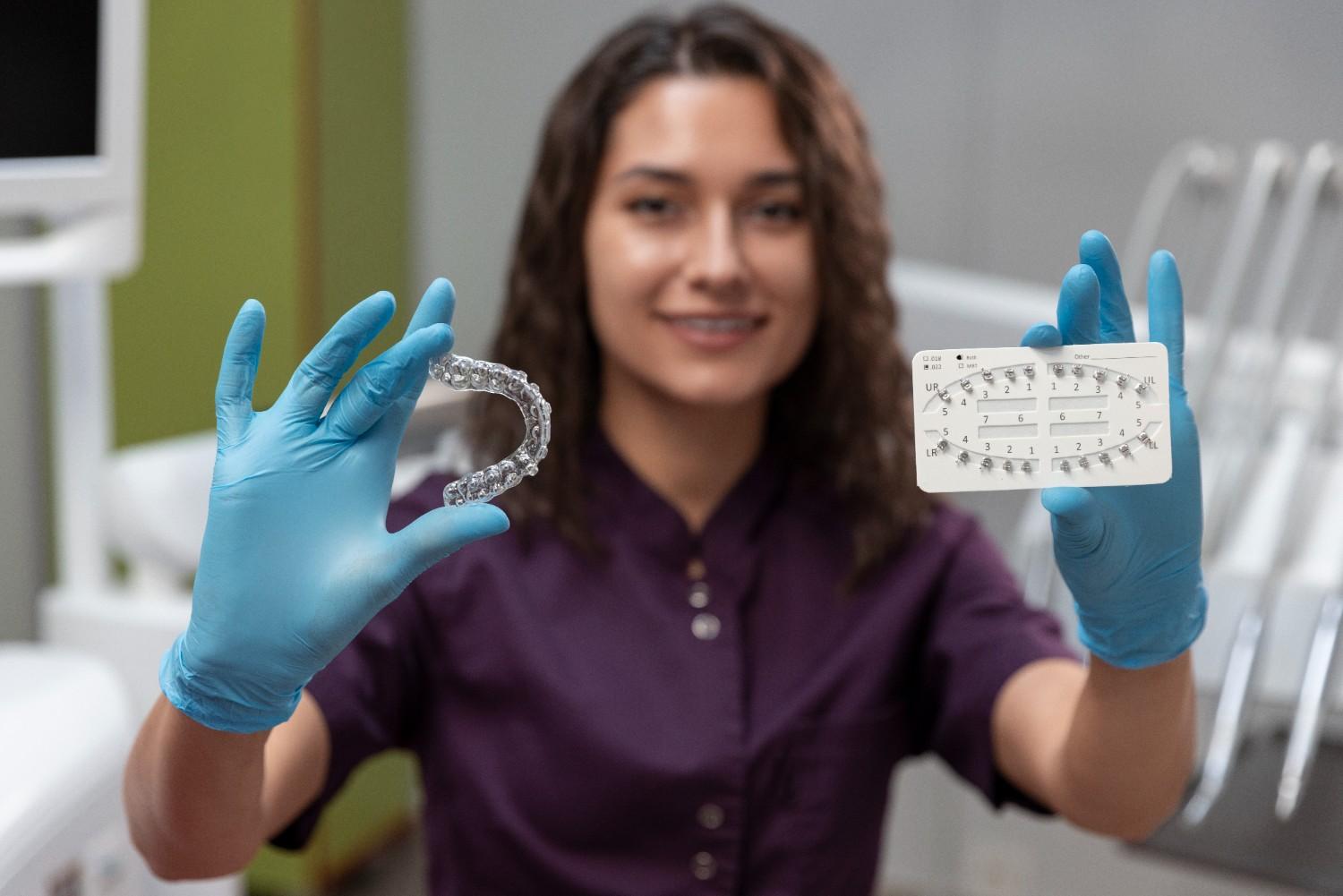
Adults who want straighter teeth can choose Invisalign in Kitsilano or traditional braces. Both can help move teeth into a better position. Invisalign may be a good choice if you want clear, removable aligners that are less noticeable. Braces may work better for some teeth that need more controlled movement. Neither option is right for everyone. The best choice depends on your teeth, bite, treatment goals, daily routine, and your ability to follow the care instructions. You can remove Invisalign aligners when you eat, brush, and floss. Braces stay on your teeth throughout treatment.
Knowing these differences can help you compare both options and understand which treatment may be a better fit for your smile.
Invisalign vs Braces: What Is the Main Difference?
Invisalign uses a series of clear, removable aligners to move the teeth slowly. Each aligner is worn for most of the day before moving to the next one, as advised by your orthodontist.
Braces use brackets attached to the teeth and wires that slowly move the teeth. Unlike Invisalign, braces stay on your teeth throughout treatment.
Both options can help with dental concerns such as:
- Crowded teeth
- Gaps between teeth
- Certain bite problems
- Teeth that are not properly aligned
The right treatment depends on the specific movement needed rather than age alone.
When May Invisalign Be a Better Fit?
Invisalign near you may be a good choice for adults who want a less noticeable way to straighten their teeth. The clear aligners can be removed when eating, brushing, and flossing.
This can make aligners convenient for adults who have busy work schedules, social events, or specific appearance concerns.
Invisalign also allows normal foods to be enjoyed because the aligners are removed before eating. However, they need to be worn as directed to keep treatment progressing as planned.
When May Braces Be a Better Choice?
Braces may be recommended when more controlled or complex tooth movement is needed. They remain attached to the teeth, so there is no need to remember to put them back in after meals.
Braces can be useful when treatment requires:
- Significant tooth movement
- More detailed control of tooth position
- Correction of certain bite concerns
- A treatment approach where removable aligners may not be suitable
A dentist in Kitsilano can assess the alignment and bite to determine whether braces or clear aligners are appropriate.
What Factors Should Adults Consider?
Choosing between Invisalign and braces involves more than appearance. Daily routine and treatment needs also matter.
Consider:
- Look: Clear aligners are harder to notice than metal braces.
- Removable: You can take clear aligners out, but braces stay on your teeth.
- Cleaning: You can remove clear aligners to brush and floss your teeth normally.
- Food choices: Braces may require avoiding certain hard or sticky foods.
- Discipline: Aligners need to be worn consistently to work as planned.
- Treatment needs: Some tooth movements may be better suited to braces.
An Invisalign near-you consultation can help explain which option may be appropriate for your specific alignment concern.
How Can Adults Prepare for Orthodontic Treatment?
Good preparation can make orthodontic treatment easier to manage. A dental assessment should come first so the teeth and gums can be checked before treatment begins.
It can also help to:
- Understand how long treatment may take
- Ask how often appointments are needed.
- Learn about cleaning and daily care.
- Discuss existing dental work.
- Understand what happens after active treatment.
A dentist near you can explain the treatment process and help identify any dental concerns that should be addressed before orthodontic treatment.
Which Option Is Easier to Maintain?
Both options require regular care. The main difference is how that care is performed.
With Invisalign, aligners should be removed before eating and cleaned as instructed. Teeth still need to be brushed and cleaned between them before the aligners are put back in.
With braces, brushing around brackets and wires takes extra attention. Sticky or hard foods may also need to be limited to help protect the braces.
Neither option works well without consistent daily care.
Is Invisalign or Braces Faster for Adults?
There is no single treatment time for every adult. The length of treatment depends on the starting position of the teeth, the type of movement needed, and how closely treatment instructions are followed.
Some cases may be completed with clear aligners, while others may need braces or a different approach. Treatment time should be estimated after examining the teeth rather than based only on the treatment type.
Find the Orthodontic Option That Fits Your Smile!
Choosing between Invisalign and braces should be based on the movements needed, daily routine, appearance preferences, and ability to follow treatment instructions. A detailed assessment can help clarify which approach may provide a suitable path toward better tooth alignment.
Schedule a consultation with a Crossbeam Dental to compare Invisalign and braces and understand which option may suit your smile goals.
FAQs
Is Invisalign better than braces for adults?
Not always. Invisalign may be preferable for adults who want removable, less noticeable treatment, while braces may be better suited to certain complex tooth movements. The appropriate choice depends on the individual case.
Can Invisalign fix severely crooked teeth?
Invisalign can correct many types of tooth alignment problems, but not every case is suitable for clear aligners alone. An assessment is needed to determine whether the required movements can be achieved with aligners.
Is Invisalign more comfortable than braces?
Clear aligners do not have metal brackets and wires, which some adults may find more comfortable. However, aligners can still cause temporary pressure or soreness as the teeth begin moving.
Can braces or Invisalign be used if an adult has dental fillings?
Having fillings does not automatically prevent orthodontic treatment. The condition of the teeth and existing dental work should be checked before treatment begins.